
Photoperiod Control in Greenhouses and Indoor Farms | LED Grow Light Timing
Precision Timing as a Crop Management Tool

Plants do not simply need light. They need the right amount of light, delivered at the right time, for the right duration, with the right spectral composition. In horticulture, photoperiod is defined by beeing the daily ratio between light and darkness. It is one of the most powerful variables available to growers. Proper photoperiod control with grow lights can accelerate flowering, suppress dormancy, optimize biomass accumulation, compress production cycles, and improve crop uniformity. Poor photoperiod control can delay flowering, trigger premature bolting, reduce yield, or destabilize entire production schedules.
For greenhouse operators and indoor farm designers, LED technology has fundamentally transformed what photoperiod control means in practice. A decade ago, photoperiod manipulation largely involved switching high-pressure sodium fixtures on and off at fixed times. Today, modern horticulture systems use programmable spectral channels, precision dimming, adaptive control algorithms, and phytochrome-targeted lighting strategies designed around crop-specific photobiology.
The engineering and the plant science have converged.
Plants measure Darkness, not Daylight
The conventional explanation that plants “measure day length” is technically incomplete. Plants primarily measure the duration of uninterrupted darkness.
This distinction matters enormously in commercial production.
Photoperiod sensing is governed mainly by phytochromes — photoreversible photoreceptors that exist in two forms: Pr, which absorbs red light around 660 nm, and Pfr, the biologically active form that absorbs far-red light around 730 nm. During the day, red photons convert Pr into Pfr. During darkness, Pfr gradually reverts back to Pr through a thermal process called dark reversion. Flowering responses occur when the concentration of active phytochrome crosses species-specific thresholds.

Cryptochromes, the blue and UV-A light receptors, also participate in photoperiod regulation by interacting with the circadian clock and flowering pathways. Together, these receptor systems allow plants to detect seasonal changes with extraordinary precision.
This is why even a brief pulse of low-intensity red light during the night can reset the phytochrome clock and interrupt the perceived dark period:

Commercial night interruption lighting exploits exactly this mechanism. In many species, just 5–15 µmol·m⁻²·s⁻¹ of red light applied in the middle of the night is sufficient to suppress flowering responses that would otherwise occur under long uninterrupted darkness.
From an energy perspective, few horticultural interventions are more efficient.
Understanding crop photoperiod categories
Before designing any greenhouse or indoor lighting strategy, growers must understand whether the crop is short-day, long-day, or day-neutral.
Short-day plants flower when nights exceed a critical duration, typically between 9 and 12 hours depending on species and cultivar. Commercial examples include chrysanthemum, poinsettia, strawberry, and cannabis. In these crops, vegetative growth requires interruption of long nights, while flowering induction requires carefully controlled uninterrupted darkness. This is why commercial chrysanthemum production relies heavily on blackout curtain systems combined with photoperiod lighting.
Long-day plants behave in the opposite way. They flower when nights become sufficiently short or when days exceed a minimum duration. Many ornamental annuals, bedding plants, spinach, radish, and lettuce cultivars fall into this category. In winter greenhouse production, long-day lighting accelerates flowering and can shorten production cycles significantly.
Day-neutral plants flower independently of photoperiod once they reach physiological maturity. Tomatoes, cucumbers, peppers, and many leafy greens behave this way. However, even in day-neutral crops, photoperiod still strongly affects photosynthesis, biomass accumulation, morphology, and energy-use efficiency. In these systems, photoperiod management becomes more closely tied to Daily Light Integral (DLI) optimization than to flowering induction.

Some crops also exhibit quantitative photoperiod responses rather than absolute ones. A quantitative short-day crop may still flower under long days, but more slowly and less uniformly. This distinction becomes extremely important in commercial scheduling.
Photoperiod and DLI: two variables that cannot be separated
Daily light integral (DLI) and photoperiod are not independent variables. DLI is the product of PPFD and photoperiod duration, so any target DLI can theoretically be achieved through multiple combinations of intensity and time.
DLI = PPFD \times photoperiod \times 3600 \times 10^{-6}
This relationship explains why modern vertical farms frequently operate with relatively moderate PPFD levels over extended photoperiods instead of relying exclusively on extremely high instantaneous light intensities.
Research on indoor iceberg lettuce production illustrates this clearly. A study examined lettuce grown at a constant PPFD of 200 µmol·m⁻²·s⁻¹ under 12-hour, 16-hour, and 20-hour photoperiods, producing DLIs of 8.64, 11.5, and 14.4 mol·m⁻²·day⁻¹ respectively. Fresh weight increased substantially when DLI rose from 8.64 to 11.5 mol·m⁻²·day⁻¹, but declined when photoperiod was extended to 20 hours despite the higher DLI.

The optimal treatment was:
* 200 µmol·m⁻²·s⁻¹ PPFD
* 16-hour photoperiod
* 11.5 mol·m⁻²·day⁻¹ DLI
That regime delivered the highest fresh weight, water-use efficiency, and energy-use efficiency.
The broader implication is important: longer photoperiods are not automatically beneficial. Extended lighting can disrupt circadian rhythms, increase oxidative stress, reduce energy-use efficiency, and in crops like tomato even induce chlorotic injury under near-continuous lighting.
For greenhouse operators, the real question is rarely “What photoperiod should I use?” The correct question is: “What DLI deficit exists, and what photoperiod/PPFD combination closes it most efficiently?”
Night Interruption: one of the most efficient lighting strategies in Horticulture
Where full day-extension lighting would be expensive, night interruption (NI) provides a remarkably efficient alternative.

Because plants measure uninterrupted darkness rather than total day length, a 2–4 hour pulse of light during the middle of the night is often enough to suppress flowering in short-day crops. The total photon requirement is extremely small compared to full supplemental lighting systems.
The effectiveness of NI depends heavily on spectrum. Red light around 660 nm efficiently converts phytochrome into the active Pfr state, interrupting the night signal. Far-red light has the opposite effect, driving phytochrome back toward the inactive form.
This means fixture spectrum matters enormously.
Broad-spectrum legacy lamps containing substantial far-red energy may produce very different flowering responses compared with narrow-band red LEDs. Modern red-dominant LED systems therefore remain the commercial standard for night interruption applications.
In practical greenhouse operation, this allows growers to maintain vegetative growth in chrysanthemums, poinsettias, or cannabis mother stock using only a fraction of the energy required for full photoperiod extension.
Spectral Quality and Phytochrome Photostationary State (PPS)
For any given light source, the ratio of active Pfr to total phytochrome at photoequilibrium is called the phytochrome photostationary state (PSS). It is determined by the red-to-far-red ratio (R:FR) of the light spectrum. A high R:FR (many red photons relative to far-red) produces a high PSS, driving more phytochrome into the active Pfr state. A low R:FR mimics canopy shade conditions and suppresses Pfr accumulation. This has major implications for morphology and crop steering.

In strawberry propagation, lower PSS environments generated by full-spectrum white LEDs containing more far-red light increased runner production compared with narrow-band red/blue lighting systems. Conversely, increasing the red fraction suppressed runner formation and altered the vegetative-reproductive balance.
Modern horticulture LEDs are increasingly designed around these photoreceptor interactions rather than simple photosynthetic efficiency alone. Application-specific white spectra that incorporate calibrated far-red content now allow growers to manipulate elongation, flowering, canopy architecture, and vegetative propagation simultaneously.
The industry is moving beyond “grow lights” toward true photobiological management systems.
Greenhouse vs Indoor Farm photoperiod strategies with grow lights
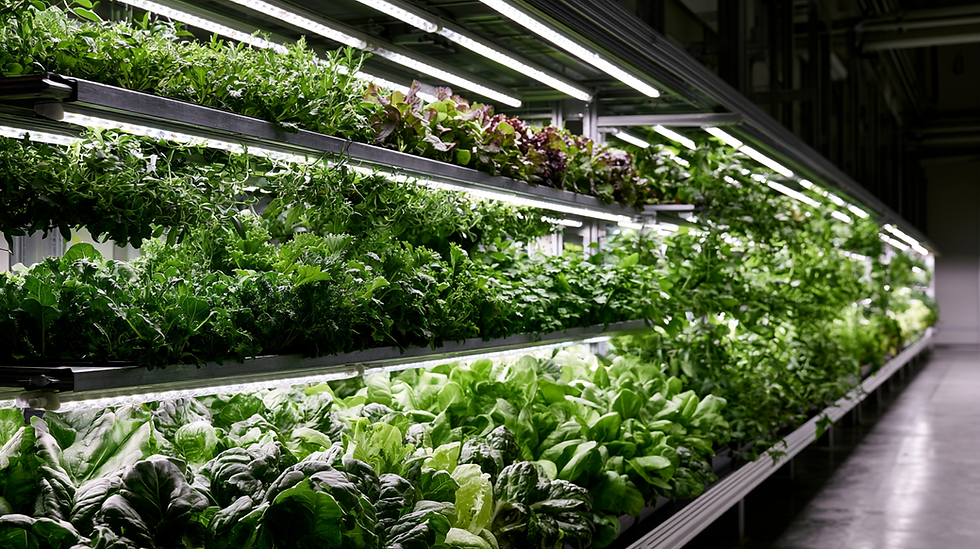
The photoperiod management challenge looks different depending on whether LEDs are supplementing daylight (greenhouse) or providing it entirely (indoor vertical farm or plant factory).

In greenhouse supplemental lighting, the objective is usually to maintain a defined DLI regardless of seasonal variation in solar irradiance. A common strategy uses sensor-based adaptive control: LEDs supplement only when ambient PPFD falls below a threshold (e.g., 200 µmol·m⁻²·s⁻¹), reducing operating hours and electricity cost during bright periods. Research comparing prediction-based and heuristic supplemental lighting strategies in greenhouse lettuce demonstrated electricity cost reductions of 4–34% depending on season, while maintaining growth equivalent to continuous fixed-intensity treatment — with the largest savings in spring when solar radiation is variable but sufficient for significant periods.
In sole-source indoor farming, there is no solar input to integrate. The grower controls 100% of photon delivery and can set any photoperiod from 0 to 24 h. This freedom comes with responsibility: the energy cost of every extra hour of light is fully borne by the operation. At a PPFD of 200 µmol·m⁻²·s⁻¹, running lights for 20 h versus 16 h increases daily energy draw by 25% — and if the additional DLI does not translate proportionally to yield gain (as the lettuce data above shows it often does not at higher DLIs), the economics degrade sharply.

Commercial indoor farms most commonly operate 16–20 h photoperiods for leafy greens, with the preference for 16–18 h being driven not by photobiology alone but by the interaction of DLI targets, fixture PPFD, energy costs, and cultivar response curves. There is ongoing industry interest in continuous lighting (24 h) for some crops, but this practice is not yet widespread partly because of photoperiod sensitivity in certain varieties and partly because of operational complexity.
Grow light requirements for modern photoperiod control
Effective photoperiod management places different demands on fixtures than standard supplemental lighting.
Night interruption applications require very low PPFD with extremely precise dimming capability. Fixtures designed exclusively for high-output photosynthetic lighting often struggle to dim smoothly to the low intensities needed for phytochrome manipulation.
Spectral flexibility is equally important. Systems that must support vegetative production, flowering induction, and end-of-day far-red treatments benefit from multi-channel architectures combining white, red, and far-red LEDs under independent control.
Uniformity also becomes critical. Non-uniform night interruption lighting can create uneven flowering across crop blocks, complicating harvest scheduling and reducing product consistency.
Finally, reliability matters enormously because photoperiod programs operate continuously year-round. Thermal management, driver stability, and long-term spectral consistency directly affect production reliability.
Practical Photoperiod strategy guidelines
In most controlled-environment operations, several principles consistently hold true.
DLI targets should be established first, with photoperiod then derived from fixture PPFD and available sunlight.
Photoperiod should be treated as a developmental control parameter, not simply an electricity scheduling variable.
Night interruption should be preferred over full day extension whenever the crop physiology allows it, particularly in short-day ornamental production.
Changes in spectrum — especially red-to-far-red ratio — should always be validated carefully because they may alter flowering behavior even when PPFD remains constant.
Photoperiod optimization must always be evaluated economically, not only biologically. The most productive lighting strategy is not necessarily the most profitable one.
Precision crop steering through light timing
Photoperiod control is applied plant physiology executed through lighting engineering.
The underlying biology is now well understood. The LED tools needed to manipulate phytochrome and cryptochrome signaling with precision already exist. What has changed over the last decade is the granularity of control now achievable inside commercial horticulture environments.
Programmable drivers, adaptive dimming systems, spectral switching, integrated sensors, and high-efficiency horticulture LEDs from manufacturers such as Nichia, Cree, ams OSRAM, Seoul Semiconductor, and Lumileds have transformed photoperiod management into a highly precise crop steering technology.
Growers who treat photoperiod as a first-class production variable — integrated into fixture design, greenhouse architecture, and control software from the beginning — consistently achieve better scheduling precision, higher crop uniformity, and improved production efficiency.
At LUMISTRIPS, we design horticulture LED modules and custom lighting systems that enable precise photoperiod, DLI, and spectral management across greenhouse and indoor farming applications. From low-intensity night interruption lighting to dynamic multi-channel vertical farming systems, modern horticulture LEDs now allow growers to engineer crop development with a level of precision that traditional lighting technologies could never achieve.

Frequently asked questions
What is photoperiod control in horticulture?
Photoperiod control is the management of daily light and dark periods to influence plant growth, flowering, dormancy, morphology and production timing. In greenhouses and indoor farms, it is usually controlled with LED grow lights, blackout curtains, timers, dimming systems and climate-control software.
Why is photoperiod important for greenhouse crops?
Photoperiod determines whether many crops remain vegetative or transition to flowering. It also affects growth speed, stem elongation, crop uniformity and harvest timing. For commercial growers, photoperiod control helps synchronize production with market demand.
Do plants measure day length or night length?
Plants respond strongly to the duration of uninterrupted darkness. This is why a short light pulse during the night can interrupt the plant’s perception of darkness and change flowering behavior.
What is night interruption lighting?
Night interruption lighting is a technique where low-intensity light is applied during the middle of the night to break up the dark period. It is commonly used to prevent flowering in short-day crops or to create long-day conditions with much lower energy use than full day-extension lighting.
Which light color is best for night interruption?
Red light around 660 nm is generally the most effective for night interruption because it directly affects phytochrome activity. Far-red light around 730 nm can reverse some red-light effects, so the red-to-far-red ratio is important.
What is the difference between short-day and long-day plants?
Short-day plants flower when nights are long enough. Examples include chrysanthemum, poinsettia, strawberry and cannabis. Long-day plants flower when nights are short enough or days are long enough. Examples include many ornamentals, spinach, radish and some lettuce cultivars.
Are tomatoes photoperiod-sensitive?
Most commercial tomato varieties are considered day-neutral for flowering, but photoperiod still affects their growth, energy balance, morphology and yield. Very long photoperiods can cause stress or leaf injury in some tomato crops.
How does photoperiod relate to DLI?
Photoperiod is one part of DLI. DLI depends on both light intensity and lighting duration. A grower can increase DLI by raising PPFD, extending photoperiod, or combining both strategies.
Is a longer photoperiod always better?
No. Longer photoperiods can increase biomass up to a point, but excessive lighting can reduce energy efficiency, disturb circadian rhythms and cause stress. The optimal photoperiod depends on crop, cultivar, PPFD, DLI target and production goal.
What photoperiod is common in vertical farms?
Many vertical farms use 16 to 18 hours of light per day for leafy greens because this range often balances biomass production, DLI targets and electricity cost. Some systems use up to 20 hours, but crop response must be validated.
Why are LEDs better for photoperiod control than HPS lamps?
LEDs offer precise dimming, spectral control, low radiant heat, high efficiency and programmable operation. This makes them much better suited for night interruption, end-of-day far-red treatments, dynamic DLI control and indoor farm lighting recipes.
Can photoperiod control reduce energy costs?
Yes. Techniques such as night interruption, adaptive dimming and weather-responsive supplemental lighting can reduce unnecessary lighting hours while maintaining crop development targets.
Do blackout curtains still matter if LEDs are used?
Yes. For short-day crops, blackout curtains are often essential to create uninterrupted darkness and trigger flowering. LEDs control the light period, while blackout systems control the dark period.
What should growers define first: photoperiod or DLI?
In most production systems, the DLI target should be defined first. The grower can then calculate the required photoperiod based on fixture PPFD, crop requirements, natural sunlight contribution and energy cost.
How can LUMISTRIPS help with photoperiod lighting?
LUMISTRIPS designs custom horticulture LED modules for greenhouse and indoor farm applications, including low-intensity photoperiod lighting, multi-channel red/far-red systems, full-spectrum grow light modules and dimmable LED solutions for precise crop steering.

Comments