
PPFD in LED grow lights
Updated: Apr 28
The Metric That Truly Defines Plant Performance Under LED Lighting

In horticulture lighting, there has been a fundamental shift in how performance is defined. Traditional metrics such as watts or lumens no longer provide meaningful insight into how plants actually respond to light. Instead, modern cultivation relies on a parameter that directly reflects biological interaction: PPFD, or Photosynthetic Photon Flux Density.
PPFD is not simply another technical specification—it is the core metric that determines how effectively a lighting system drives photosynthesis, growth, and yield. As controlled environment agriculture continues to scale, understanding PPFD has become essential for both system design and crop optimization.
From light output to plant response

At its core, PPFD measures the number of photons within the photosynthetically active radiation (PAR) range—between 400 and 700 nanometers—that reach a defined surface every second. It is expressed in micromoles per square meter per second (μmol/m²/s), a unit that reflects the fundamental reality of plant biology: plants respond to photons, not brightness.
What Is PPFD in Grow Lights?
PPFD (Photosynthetic Photon Flux Density) measures the number of light photons in the PAR range (400–700 nm) that reach a plant surface per second. It is expressed in μmol/m²/s and represents the actual usable light available for photosynthesis.
This distinction is critical. A lighting system may generate a high total photon output, but if those photons are not efficiently delivered to the plant canopy, they do not contribute to growth. PPFD therefore bridges the gap between light generation and plant utilization, making it the most relevant metric in horticulture lighting.
Why PPFD in LED grow lights is more important than Total Output

A common source of confusion is the relationship between PPF (Photosynthetic Photon Flux) and PPFD.
• PPF measures the total photon output of a light source (μmol/s)
• PPFD measures the density of those photons at the plant surface (μmol/m²/s)
This difference has major implications in real-world applications. The same luminaire can produce dramatically different PPFD values depending on how it is installed, how far it is from the canopy, and how effectively its optics distribute light.
Research in horticulture lighting consistently shows that poorly designed systems result in non-uniform photon distribution and wasted radiation, reducing canopy photon capture efficiency and increasing energy consumption. In other words, generating photons is only part of the equation—delivering them efficiently is what determines performance.
In controlled environments such as vertical farms, greenhouses, and growth chambers, PPFD becomes the primary control variable for photosynthesis, morphology, and yield.
Typical LED grow lights PPFD ranges for crop production
Different crops—and even different growth stages—require specific PPFD levels to achieve optimal performance. Based on controlled environment studies:
• Propagation / seedlings: 50–150 μmol/m²/s
• Leafy greens (lettuce, herbs): 150–300 μmol/m²/s
• Strawberries and fruiting crops: ~200–600 μmol/m²/s
• High-light crops (e.g., tomatoes, cannabis): 600–1000+ μmol/m²/s
In controlled experiments, strawberry cultivation is often performed at around 200 μmol/m²/s PPFD with a 16-hour photoperiod, providing a stable balance between growth and energy input. Leafy greens typically thrive at moderate PPFD levels, while high-light crops such as tomatoes require substantially higher intensities to reach full productivity.
What becomes clear across all applications is that PPFD must be carefully matched to the crop. Excessive intensity does not necessarily improve results and can reduce energy efficiency, while insufficient PPFD directly limits photosynthesis and yield.
Uniformity: the often overlooked factor

While PPFD is frequently discussed in terms of absolute values, its spatial distribution is equally important. A high average PPFD can still result in poor crop performance if the light is unevenly distributed.
Non-uniform lighting creates zones of overexposure and underexposure within the canopy, which leads to
• Uneven plant growth
• Variable morphology and quality
• Reduced overall yield
• Wasted electrical energy.
Studies have demonstrated that canopy photon capture efficiency decreases when the lighting field is uneven, particularly when fixture size or spacing is not optimized.
For this reason, modern horticulture lighting design focuses heavily on uniformity. Advanced optical solutions, such as wide-beam or batwing lens designs, are specifically developed to spread photons more evenly across the growing area. These approaches not only improve plant consistency but can also reduce the total number of luminaires required while maintaining the same PPFD at canopy level.
How modern LED systems shape PPFD
The evolution of LED technology has enabled a fundamental redesign of horticulture lighting systems. Instead of relying on single-point, high-intensity sources, modern systems distribute light across larger areas using modular architectures.
With our long experience in horticulture we can conclude that linear LED systems dominate horticulture applications, accounting for more than two-thirds of projects. These systems with LED strips or modules—often installed in multiple narrow light bars—are specifically engineered to deliver for LED grow lights an uniform PPFD across the canopy.
This design philosophy reflects a key principle: rather than concentrating light in one location, it is more effective to distribute photons evenly over the entire growing area. In dense crops, additional strategies such as inter-canopy lighting are used to deliver PPFD deeper into the plant structure, improving light utilization throughout the entire canopy.
PPFD and light penetration

PPFD is typically measured at the top of the canopy, but plant growth depends on how light penetrates through all layers of foliage. Not all wavelengths behave the same way within the plant structure.
Red light drives photosynthesis efficiently at the leaf surface
Blue light regulates morphology and development
Green light penetrates deeper into the canopy, supporting lower leaves
This means that achieving optimal PPFD is not only about intensity, but also about ensuring that photons are effectively distributed both horizontally and vertically within the crop.
The role of distance and mounting strategy
One of the defining advantages of LED technology is the ability to control the distance between the light source and the plant canopy. Because LEDs emit very little radiant heat, fixtures can be positioned much closer to plants than traditional lighting systems.
This has enabled entirely new cultivation strategies, including multi-layer vertical farming and inter-canopy lighting.

In these environments, PPFD can be precisely controlled by adjusting fixture placement, spacing, and optical distribution.
PPFD is highly sensitive to the distance between the light source and the plant canopy.
• Reducing distance increases PPFD intensity
• Increasing distance improves uniformity but lowers peak intensity
LED technology offers a unique advantage here. Because LEDs emit low radiant heat, luminaires can be placed much closer to plants without causing thermal stress.
From measurement to optimization
In professional horticulture environments, PPFD is not estimated—it is measured with industry-standard tools including:
• Quantum sensors (e.g., LI-COR systems)
• Spectroradiometers for full spectral analysis
In research environments, PPFD is typically measured at canopy level under real operating conditions, not in laboratory isolation. This ensures that reflections, shading, and system geometry are fully accounted for.
PPFD as a driver of yield and efficiency
Ultimately, PPFD is not just a technical parameter—it is a direct driver of productivity. When properly optimized, it leads to faster growth cycles, higher yields, and more consistent crop quality.
Optimizing PPFD involves balancing:
• Light intensity
• Uniformity
• Spectrum
• Energy consumption
• Crop-specific requirements
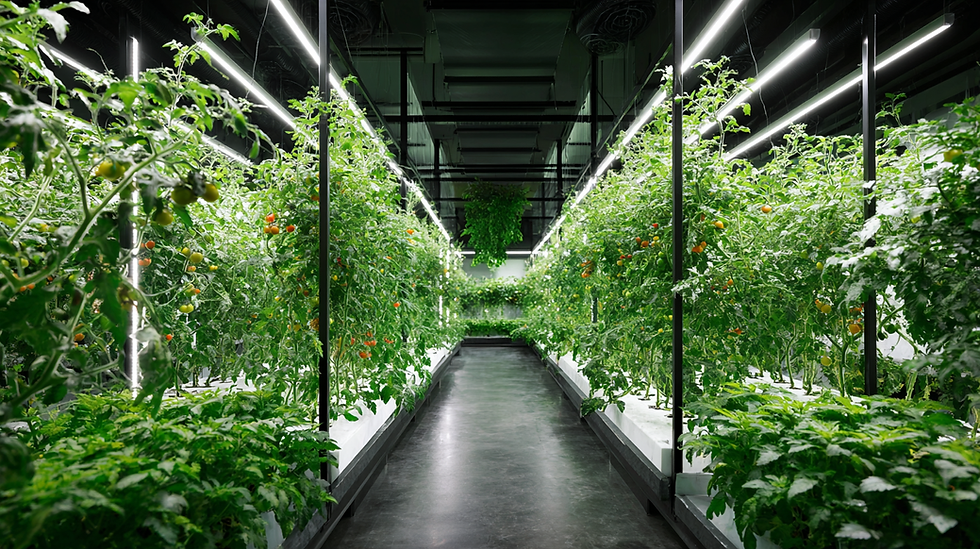
The goal is not simply to maximize PPFD, but to achieve the highest photosynthetic efficiency per watt.
Common Mistakes When Using PPFD
One of the most common mistakes in horticulture lighting is focusing solely on high PPFD values without considering uniformity and spectrum. Excessive intensity in limited areas often leads to plant stress and inefficient energy use. Equally, measuring PPFD without accounting for canopy structure or fixture positioning can result in misleading conclusions. Effective lighting design requires a balanced approach where intensity, distribution, and spectral composition are optimized together.
Engineering PPFD: the role of custom LED solutions

Achieving optimal PPFD in real-world horticulture environments is rarely a matter of selecting a standard off-the-shelf luminaire. Each application—whether a greenhouse, vertical farm, or research facility—has unique geometric constraints, crop requirements, and performance targets.
At Lumistrips, we approach horticulture lighting from a system engineering perspective. Rather than focusing solely on fixture output, we design custom LED modules and linear systems that are optimized for PPFD delivery at canopy level.
This includes careful consideration of:
• LED selection and spectral composition tailored to crop requirements
• Optical design to ensure uniform photon distribution across the cultivation area
• Mechanical layout (linear bars, multi-bar systems, or inter-canopy modules) aligned with plant architecture
• Electrical efficiency to maximize μmol/J performance at system level
With over 20 years of experience in LED technology and strong partnerships with leading component manufacturers, we develop solutions that translate theoretical PPFD targets into measurable, real-world performance.
In practice, this means designing lighting systems where PPFD is not just specified—but engineered, verified, and optimized for each project.
This allows us to translate PPFD targets into real-world performance, ensuring that every photon contributes to measurable plant growth and system efficiency.
To clarify some of the most common questions about PPFD in horticulture lighting, we summarize the key concepts below.
While this article explains how PPFD is measured and why it serves as a core metric in horticulture lighting, applying it effectively in real-world cultivation requires a deeper understanding. The same PPFD value can produce very different results depending on spectrum, crop type, canopy structure, and growth stage. To explore how to translate PPFD into practical lighting strategies—and how to optimize it for yield, quality, and energy efficiency—continue with our detailed guide on: PPFD practical guide for LED grow lights.
Frequently Asked Questions
What is PPFD in grow lights?
PPFD stands for Photosynthetic Photon Flux Density. It measures how many photons in the PAR range reach a specific plant surface each second, expressed in μmol/m²/s.
What is the difference between PPF and PPFD?
PPF measures the total number of photosynthetic photons emitted by a light source per second, while PPFD measures how many of those photons actually reach a specific area of the canopy.
What is a good PPFD for plants?
A good PPFD depends on crop type and growth stage. Seedlings need much less light than mature fruiting crops, so the optimal range can vary widely.
How is PPFD measured?
PPFD is measured at canopy level with a quantum sensor to determine how much usable light actually reaches the plants.
Why is PPFD more important than lumens in grow lights?
Lumens measure brightness based on human vision, while PPFD measures the number of photons usable for photosynthesis. For plant growth, PPFD is a far more accurate indicator of lighting performance.
Designing a lighting system with the right PPFD requires more than selecting a standard fixture.
We develop custom LED modules and systems engineered for precise photon delivery and maximum efficiency.


Comments