
LED vs HPS grow lights: which is better for plant growth?
Understanding the Shift from Traditional Lighting to Precision Horticulture

In controlled environment agriculture, lighting is no longer a supporting element—it is one of the primary drivers of plant performance. For many years, High-Pressure Sodium (HPS) lamps were the default solution for greenhouses and indoor cultivation. They delivered high light output, were relatively affordable, and became deeply integrated into horticultural practices.
Today, however, the industry is undergoing a fundamental transition. LED grow lights are rapidly replacing HPS systems in horticulture because they align far more closely with how plants actually respond to light.
This shift reflects a deeper change in philosophy: from maximizing light intensity to optimizing light quality.
The fundamental difference: Emission vs Engineering
HPS lamps generate light through a gas discharge process. The resulting spectrum is fixed and dominated by yellow and orange wavelengths, with relatively little blue light and a significant portion of energy emitted as heat.
LEDs operate on an entirely different principle. As semiconductor light sources, they allow precise control over emitted wavelengths. This means that instead of accepting a predefined spectrum, lighting can be engineered to match plant requirements.
This distinction is critical. Plants do not respond equally to all wavelengths:
Blue light influences compact growth and leaf development
Red light drives photosynthesis
Green light contributes to canopy penetration,
Far-red affects elongation and flowering responses.
HPS provides a broad but unbalanced mix, while LEDs enable targeted spectral design.
Spectral control and plant morphology
The limitations of HPS become particularly visible when looking at plant structure. Under HPS lighting, crops often exhibit elongated stems and less compact morphology due to the relatively low blue light content. While this can be acceptable in some applications, it restricts the ability to control plant architecture.
LED systems change this dynamic entirely, as growers can design spectra that:
• Increase blue light for compact, robust plants
• Optimize red light for photosynthetic efficiency
• Introduce far-red to control flowering and elongation
• Balance green light for canopy penetration
This ability to engineer light as a biological tool is one of the most significant advantages of LED technology.
Efficiency of grow lights: from power consumption to usable photons

In modern horticulture, efficiency is not measured in watts, but in how effectively electrical energy is converted into photosynthetically active photons:
HPS systems typically operate in the range of: 1.2 – 1.7 µmol/J
Modern LED systems, especially those using high-performance mid-power or horticulture-optimized LEDs, achieve: 2.5 – 3.5 µmol/J (and beyond in optimized systems)
In practical terms, LEDs can deliver the same or higher PPFD at significantly lower power consumption. Over large installations and long photoperiods, this translates into substantial energy savings.
The implication is straightforward: more usable light reaches the plant per unit of energy consumed. Over long photoperiods and large cultivation areas, this translates into a substantial reduction in operational costs.
Thermal behavior and
environmental control

One of the defining characteristics of HPS lighting is its heat output. A large portion of the electrical energy is emitted as infrared radiation, which directly heats the plant canopy. This has several consequences:
• Increased HVAC requirements
• Risk of plant stress due to radiant heat
• Limited placement flexibility (minimum distance from canopy)
LED systems behave differently. While they still generate heat, it is primarily conducted away through heat sinks rather than radiated toward the plants. This allows for closer placement to the canopy and enables more stable environmental conditions.
In applications such as vertical farming, where multiple layers of crops are stacked in close proximity, this difference is decisive. The reduced radiant heat of LEDs makes high-density cultivation feasible, while HPS systems would create excessive thermal stress.
Light distribution and crop uniformity

HPS fixtures typically function as point sources, relying on reflectors to distribute light. This often results in uneven illumination, with high intensity directly beneath the lamp and reduced levels at the edges. Such variability can lead to inconsistent plant growth across the cultivation area.
LED systems, by contrast, can be designed as distributed light sources. Linear modules and panel configurations allow for highly uniform PPFD across the canopy. This uniformity improves crop consistency, reduces variability in growth rates, and enhances overall yield quality.
For commercial growers, consistency is not a minor detail—it directly affects product value.
Lifetime, Stability, and Maintenance
Another key difference lies in system longevity. HPS lamps typically require replacement after 10,000 to 20,000 hours due to significant degradation in light output. This leads to recurring maintenance costs and operational interruptions.
LED systems are engineered for long-term performance, often exceeding 50,000 to 100,000 hours of operation. More importantly, their light output remains stable over time, ensuring consistent growing conditions.
This reliability is particularly valuable in large-scale operations, where maintenance logistics can become complex and costly.
Crop outcomes: Yield, Quality, and Control
The ultimate benchmark for any lighting system is plant performance. In this area, LEDs offer clear advantages. Studies and commercial data consistently show that LED systems can:
• Increase yield per square meter
• Improve crop uniformity
• Enhance secondary metabolites (flavor, aroma, nutrients)
• Reduce growth cycle duration in certain crops
Additionally, the ability to adapt light recipes with full-spectrum LED lights to different growth stages allows for more precise control over the cultivation process. This is especially important in high-value crops and research applications, where small improvements can have significant economic impact.
HPS systems, while capable of producing strong yields, cannot offer the same level of precision.
Economic perspective: beyond initial cost
At first glance, HPS systems may appear more cost-effective due to lower upfront investment. However, this perspective does not account for the full operational lifecycle.
LED systems reduce energy consumption, lower cooling requirements, minimize maintenance, and often improve crop output. When these factors are considered together, the total cost of ownership typically favors LEDs, with payback periods commonly ranging from one to a few years depending on the application.
This economic reality is one of the main drivers behind the rapid adoption of LED technology in commercial horticulture.
The remaining role of HPS

Although LEDs have become the preferred solution, HPS systems have not disappeared entirely. In some greenhouse environments, they are still used as supplemental lighting, particularly where existing infrastructure is already in place.
However, even in these cases, the trend is clear. Hybrid systems are gradually giving way to fully LED-based solutions as technology costs decrease and performance continues to improve.
Toward precision lighting

The transition from HPS to LED represents more than a technological upgrade—it reflects a shift toward plant-centric lighting design. Instead of adapting plants to the limitations of the light source, modern systems adapt the light to the needs of the plant.
LED technology enables growers to move beyond simple illumination and toward:
• Spectral recipes tailored to specific crops
• Dynamic lighting strategies across growth stages
• Integration with sensors and control systems
• Optimization of both plant biology and operational efficiency
Our approach to advanced horticulture lighting
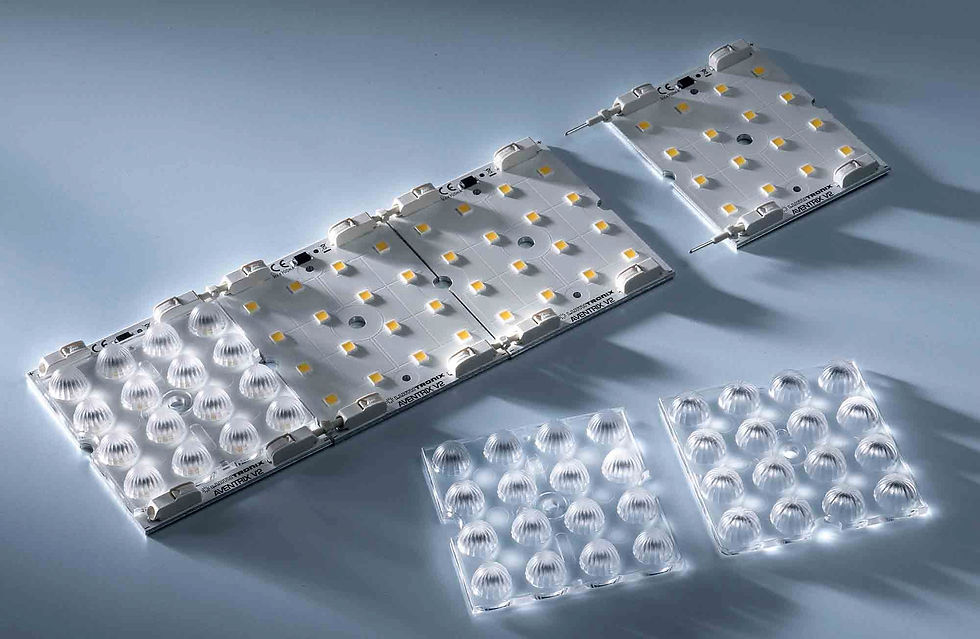
At Lumistrips, we design LED modules that support this new generation of horticulture systems. By combining high-efficiency LEDs with precise spectral configurations and optimized thermal management, we create solutions tailored to specific crops and cultivation methods.
Our Reel-to-Reel production technology enables scalable manufacturing of flexible LED modules, supporting both greenhouse installations and high-density indoor farms. This allows us to deliver not only performance, but also consistency and reliability at scale.
Frequently asked questions
What is better, LED or HPS grow lights?
LED grow lights are generally better than HPS because they provide higher energy efficiency, lower heat output, and customizable light spectra that improve plant growth and yield.
Why are LED grow lights more efficient than HPS?
LEDs convert more electrical energy into photosynthetically active photons (µmol/J), while HPS lamps lose more energy as heat and infrared radiation.
Do LED grow lights increase yield compared to HPS?
Yes, LED grow lights can increase yield by improving light distribution, enabling optimized spectra, and reducing plant stress caused by excess heat.
What are the disadvantages of HPS grow lights?
HPS systems produce high heat, have lower efficiency, limited spectral control, and require frequent lamp replacement.
Can LED replace HPS in greenhouses?
Yes, in most modern greenhouse and indoor farming applications, LED grow lights are replacing HPS due to better performance and lower operating costs.
A clear technological transition
The comparison between LED and HPS is no longer a close competition. It represents a transition from one generation of technology to another.
Feature | LED Grow Lights | HPS Grow Lights |
Spectrum | Fully customizable | Fixed |
Efficiency | 2.5–3.5 µmol/J | 1.2–1.7 µmol/J |
Heat Output | Low (controlled) | High (radiant heat) |
Lifetime | 50,000–100,000 h | 10,000–20,000 h |
Light Distribution | Uniform | Uneven (hotspots) |
Maintenance | Minimal | Frequent replacement |
HPS defined the early era of controlled environment agriculture.
LEDs define its future.
With higher efficiency, precise spectral control, better thermal behavior, and superior long-term economics, LED grow lights provide a fundamentally better platform for modern horticulture.
LED grow lights can reduce energy consumption by up to 40–60% compared to HPS systems, depending on the application and lighting design.
For growers aiming to maximize yield, quality, and sustainability, the direction is clear:
light is no longer just illumination—it is a controllable input for plant performance
We design and manufacture custom LED horticulture modules tailored to your crop, environment, and performance targets.
Whether you are developing a greenhouse system or a vertical farm, we help you move beyond standard lighting and toward optimized plant growth,.


Comments